Step-by-Step Instructions
COOK THE RICE
- Prep the Rice: Rinse your Jasmine rice under cold water until the water runs mostly clear. This removes excess starch, preventing the cooked rice from becoming gummy.
Cook and Set Aside: Cook the rice according to your usual method (stove or rice cooker) and set aside.
SAUCE METHOD
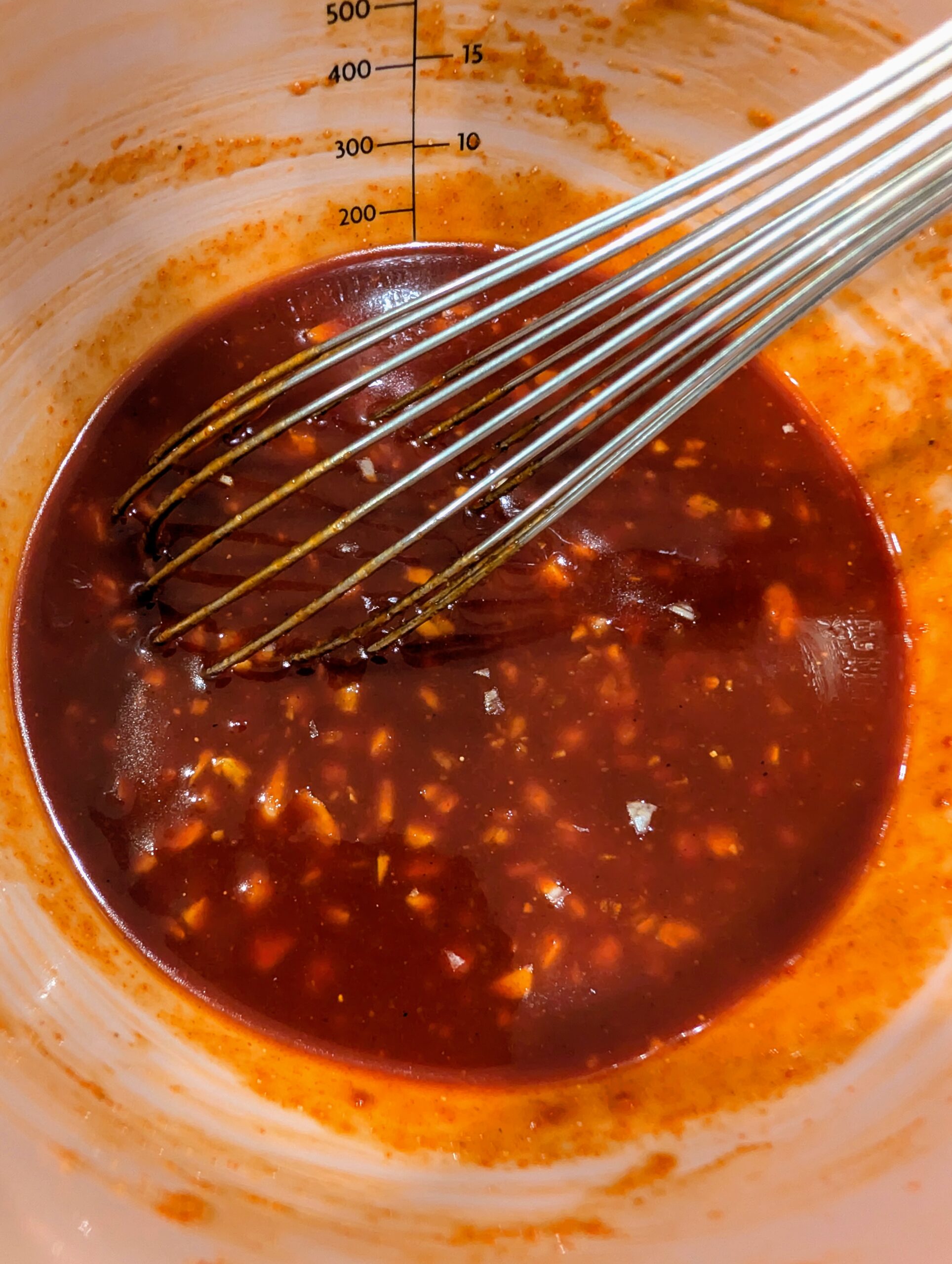
- Combine Ingredients: In a small bowl, whisk together the Gochujang, light soy sauce, rice vinegar, the chosen sweetener (maple or rice syrup), and minced garlic.
Adjust Seasoning: Taste and adjust for desired spice, sweetness, or tang. Set the sauce aside while you prepare the vegetables.
PREPARE ALL VEGETABLES
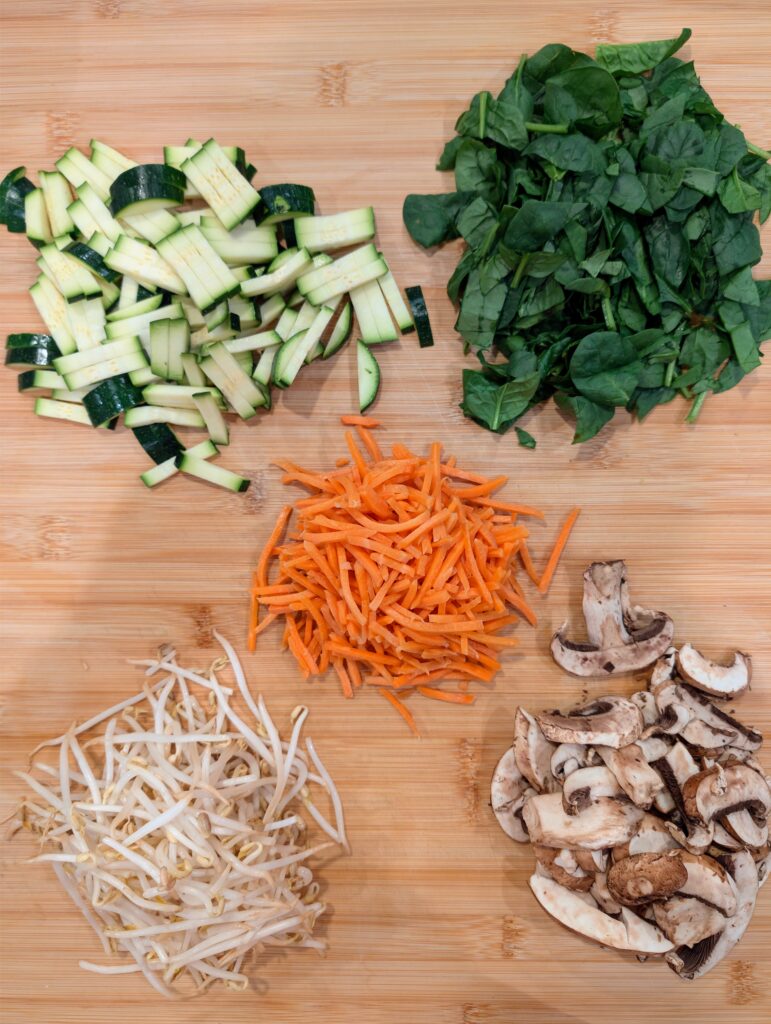
- Mushroom Sauté: Cut your mushrooms into thin, bite-sized pieces. Place a pan over medium heat with a little sesame oil. Once hot, sauté the mushrooms until they are tender and slightly browned. Season with a small amount of light soy sauce. Set aside.
- Spinach Sauté: Return the pan to the heat and add a bit more oil. Add the spinach and quickly sauté it for about one minute until it is just wilted. Drain any excess liquid. Season lightly with light soy sauce. Set aside.
- Carrots and Zucchini: Add a touch more sesame oil to the pan. Quickly sauté the carrots and zucchini separately, cooking each for only about one minute. This keeps them crisp. As you finish each one, season it lightly with light soy sauce and set it aside.
Finish Sprouts: Gently steam or blanch the mung bean sprouts for about one minute in simmering water. Drain them well and set aside.
CREATE YOUR BOWL
- Base Layer: Place a generous serving of your warm rice into a large bowl.
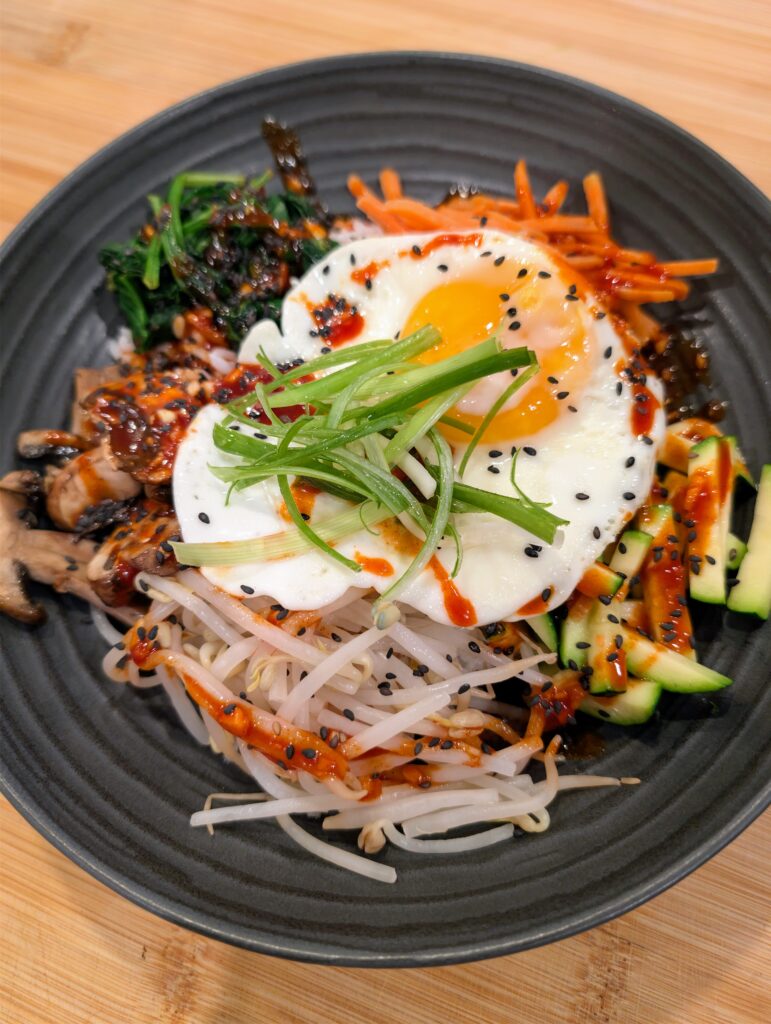
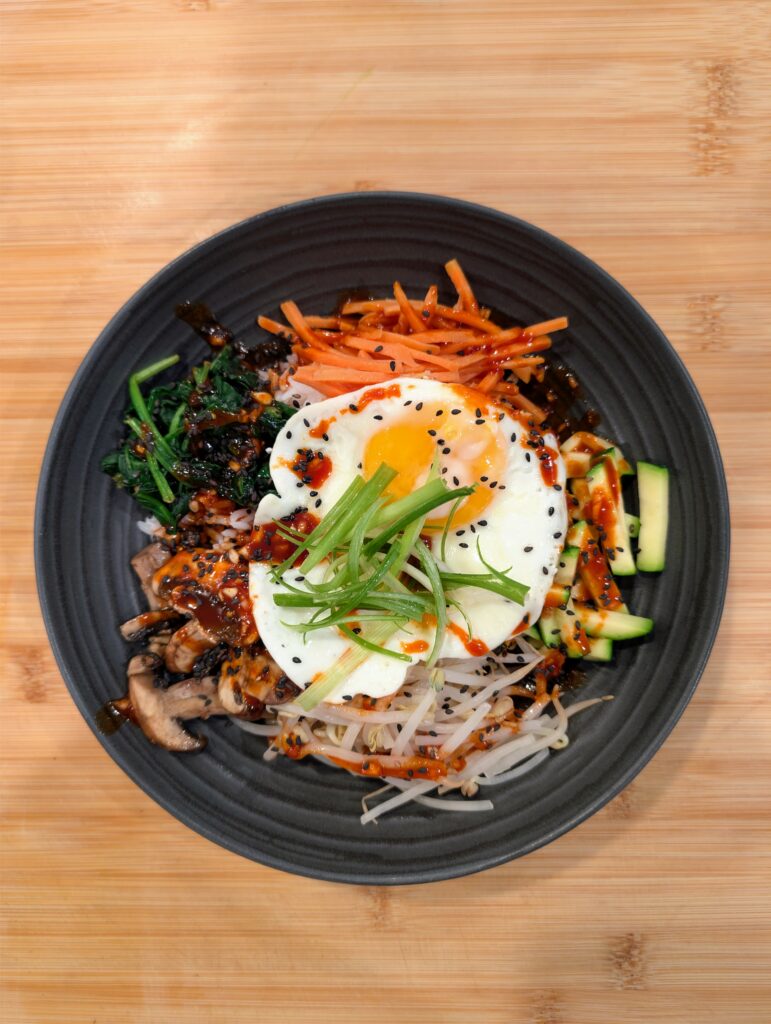
- Layer the Toppings: Artistically arrange the prepared vegetables—the zucchini, carrots, mushrooms, spinach, and bean sprouts—around the edges of the rice. Place them in neat piles so each topping is visible.
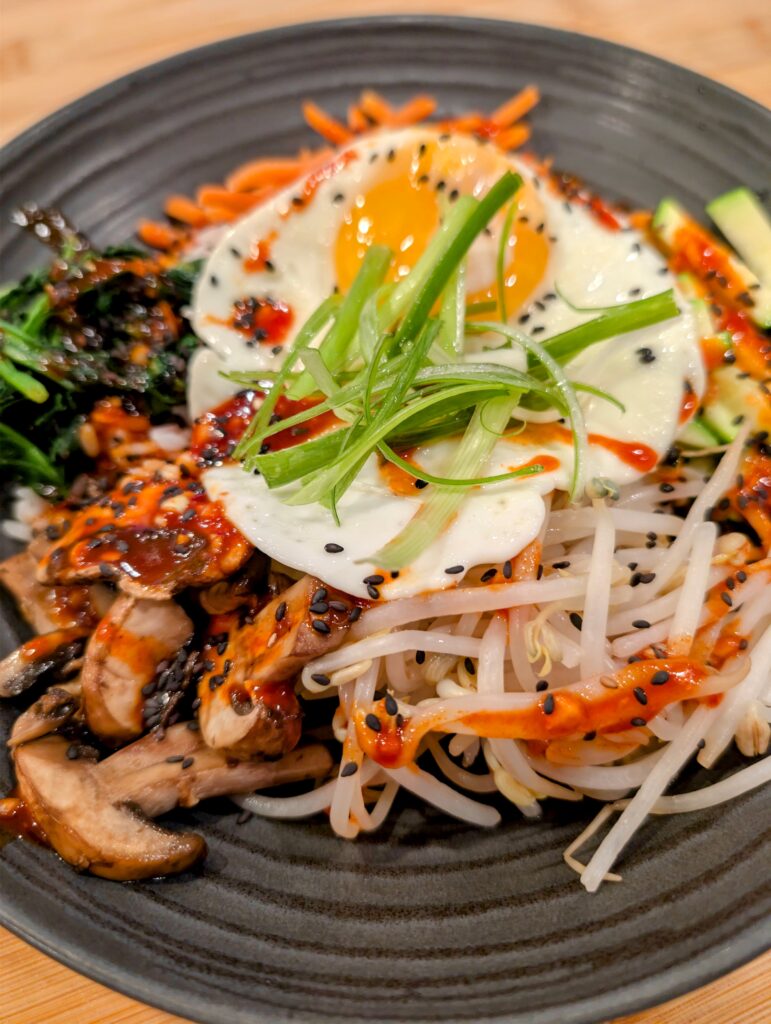
- The Garnish: Fry an egg so the yolk is still runny. Place it right in the center of the vegetables. Drizzle the entire bowl generously with the Gochujang sauce.
Final Touches: Garnish with toasted sesame seeds and fresh green onion. Serve immediately. To eat, mix everything together so the rich egg yolk and spicy sauce coat every bite of rice and vegetable.


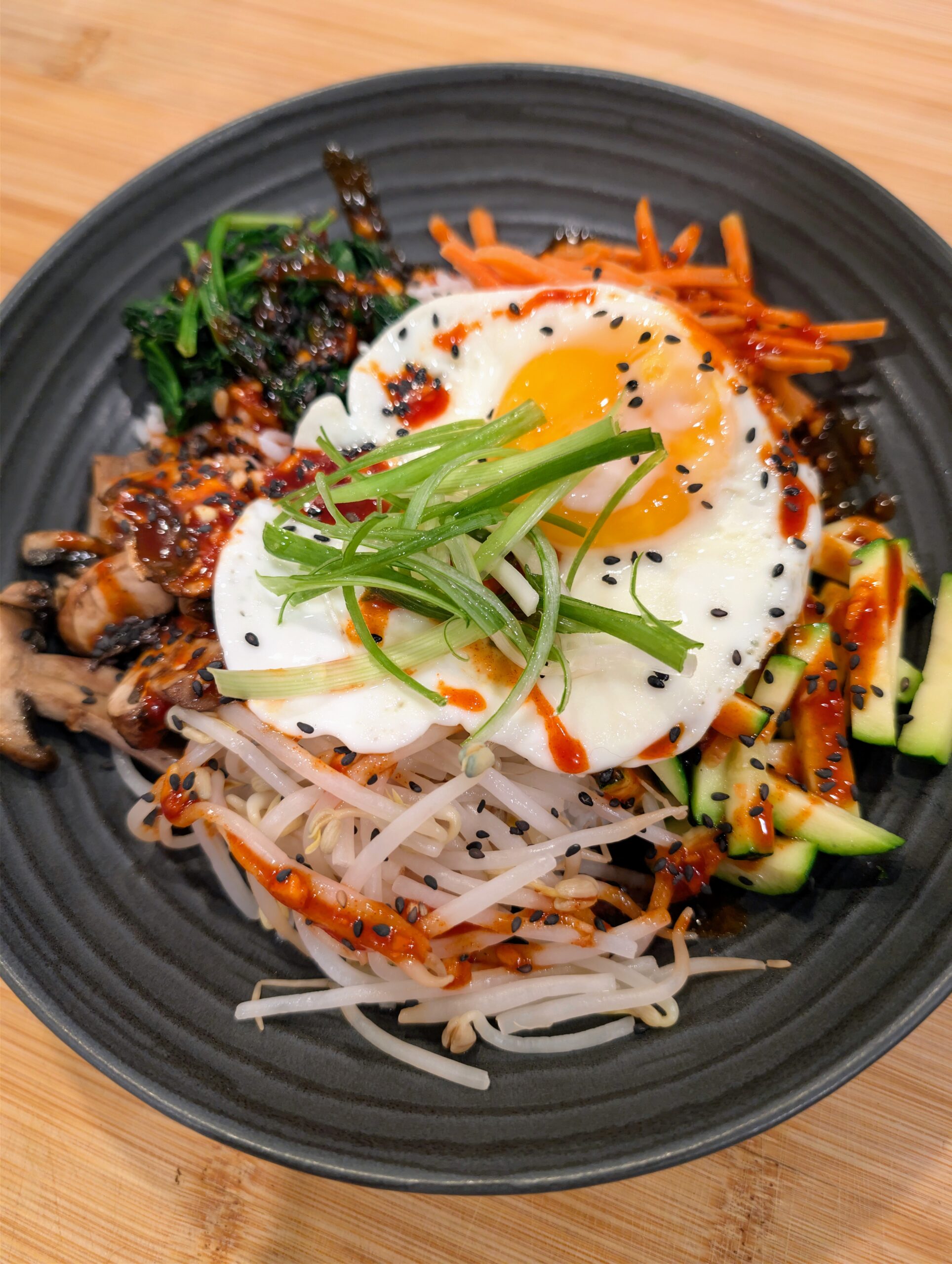
Homemade Vegetarian Bibimbap Bowl
This homemade Vegetarian Bibimbap is a vibrant bowl of layered vegetables and rice. It features savory ingredients and a balanced sauce. It’s a simple weeknight meal that brings Korean comfort food right into your kitchen.
Print
Pin
Email
Servings: 2 people
Ingredients
- 1 cup zucchini cut into bite-sized pieces
- 1 cup carrots matchstick or julienned
- 1 cup mushrooms sliced
- 2 cups baby spinach roughly chopped
- 1 cup bean sprouts
- sesame oil
- 1 stalk green onion for garnish
- jasmine rice for serving
- fried egg for topping
- sesame seeds for garnish
Bibimbap Sauce
- 4 tablespoons gochujang
- 2 teaspoons garlic minced
- 2 tablespoons sugar or maple syrup
- 2 tablespoons light soy sauce
- 2 tablespoons rice vinegar

Instructions
- Cut the green onion into approximately 2" pieces then thinly slice lengthwise. Place in a bowl of ice water and set aside (see note).1 stalk green onion
- Combine all the ingredients for the bibimbap sauce in a bowl and whisk to combine. Set aside.4 tablespoons gochujang, 2 teaspoons garlic, 2 tablespoons sugar or maple syrup, 2 tablespoons light soy sauce, 2 tablespoons rice vinegar
Steamer Method - Easier & Faster
- Place all your vegetables into a steamer basket and steam for about 10 minutes.1 cup zucchini, 2 cups baby spinach, 1 cup carrots, 1 cup mushrooms, 1 cup bean sprouts
Sauté Method - More Flavorful
- Place the bean sprouts in boiling water for 1 minute. Remove immediately and set aside.1 cup bean sprouts
- Heat 2 tablespoons of sesame oil in a pan over medium heat. Once heated, sauté the zucchini, carrots, mushrooms, and spinach individually for 1 minute each adding a splash of soy sauce each with each vegetable.1 cup zucchini, 2 cups baby spinach, 1 cup carrots, 1 cup mushrooms, sesame oil
Create Your Bowl
- Place your freshly cooked jasmine rice on the bottom of the bowl. Individually place each vegetable around the outside of the bowl.jasmine rice
- Top with an egg cooked to your liking (we usually go with sunny side up). Garnish with sesame seeds and the sliced green onions. Drizzle the sauce over top, mix up, and enjoy!fried egg, sesame seeds, 1 stalk green onion
Notes
- Placing the thinly sliced green onions in ice water will allow them to get that signature curl you see when they are used as a garnish at restaurants.
Nutrition Facts
Homemade Vegetarian Bibimbap Bowl
Amount per Serving
Calories
335
% Daily Value*
Fat
9.5
g
15
%
Saturated Fat
2.5
g
16
%
Cholesterol
92.5
mg
31
%
Sodium
500
mg
22
%
Potassium
350
mg
10
%
Carbohydrates
47.5
g
16
%
Fiber
2.5
g
10
%
Sugar
9
g
10
%
Protein
8
g
16
%
Vitamin A
4500
IU
90
%
Vitamin C
17.5
mg
21
%
Calcium
50
mg
5
%
Iron
1
mg
6
%
* Percent Daily Values are based on a 2000 calorie diet.